Orthodontic Glossary
Understanding Orthodontic Appliances & Terms
Understanding the different parts of your orthodontic appliance can be helpful in ensuring that your treatment goes smoothly. At Horton Orthodontics in Woodbury, MN, we are dedicated to empowering our patients with the knowledge they need for attaining a beautiful, straight smile through this orthodontic glossary. If you’ve ever wondered about common orthodontic terms or about the differences between the various appliances available, you’ve come to the right place!


A palatal expander is a device frequently used to correct various teeth and jaw problems in Phase 1 orthodontic treatment. It is commonly used to correct crossbite and crowding cases. There are several different types of palatal expanders, including the Rapid Palatal Expander, Bonded and Removable Expander. Dr. Horton will help decide which is best for your child!
These custom clear braces represent a cutting-edge innovation in orthodontic treatment, incorporating advanced technologies such as 3D imaging and 3D printing to provide a highly personalized experience. Made using custom brackets, LightForce Braces are designed to fit each patient’s unique dental anatomy, optimizing treatment efficiency and precision for faster and more accurate tooth movement. Lightweight and low-profile, they blend seamlessly with natural tooth color, enhancing aesthetic appeal. By integrating this technology, patients enjoy a customized, streamlined, efficient and convenient treatment option that achieves a beautifully functional smile.
A partial 2×4 fixed appliance is a modern orthodontic appliance utilized in early orthodontic treatment. It is typically used for patients with mixed dentition, when some baby teeth are still present. This appliance includes two long tubes bonded to the back teeth (usually the first molars) and four brackets attached to the front teeth (permanent incisors).
Invisalign® and custom clear aligners are clear plastic trays that fit over your teeth in a custom-fit, offering a convenient and modern alternative to metal braces. The clear, custom-made aligners gradually shift teeth into their desired positions while being virtually invisible, minimizing impact on appearance. Removable aligners allow for easy eating, drinking, brushing, and flossing, ensuring excellent oral hygiene throughout treatment. With regular orthodontic check-ups to monitor progress and receive new aligners, Invisalign®and custom clear aligners provide a comfortable, efficient and nearly invisible way to achieve a straighter, healthier smile.
A Forsus appliance, also known as Forsus springs, is an orthodontic appliance used alongside braces to correct an overbite. Our skilled and friendly technicians attach springs to each side of the patient’s jaw. The Forsus appliance exerts continuous pressure to gradually move the upper teeth back and the lower teeth forward. With the Forsus appliance, many patients can avoid more invasive treatments for an overbite, such as premolar extractions, corrective surgeries or headgear.
Elastics, or rubber bands, are small, stretchy loops used in orthodontics with braces to help move the teeth and jaw into their proper positions. They connect hooks on the brackets of the braces and can be placed in various configurations to apply specific forces, aiding in correcting bite issues, aligning teeth and achieving the desired orthodontic results. Your elastics need to be worn as directed by Dr. Horton in order to work correctly!
Power chains are continuous loops of elastic material linked together. They are used to close gaps between teeth, move teeth together and provide additional pressure to correct tooth alignment. They are stretched across multiple brackets, applying constant force over a series of teeth, which accelerates tooth movement. Luckily, power chains come in various strengths and colors, allowing customization based on the patient’s needs and preferences.
O-ties, or O-rings, are small, individual elastic rings. They are placed around each bracket to hold the archwire in place, ensuring it stays secured to the braces. O-ties are essential for transmitting the force from the archwire to the teeth, facilitating their movement. Like power chains, O-ties are available in different colors, allowing patients to personalize their braces.
Bite turbos are small, tooth-colored attachments made of acrylic or metal. Bite turbos facilitate quicker tooth movement and improve the efficiency of braces treatment. They are typically placed on the back of the upper front teeth (incisors) or on the chewing surfaces of the back teeth (molars). The purpose of bite turbos is to prevent the upper and lower teeth from fully coming together when the mouth is closed, reducing the risk of biting down on brackets and wires. They can also help to correct deep bites, where the upper teeth excessively overlap the lower teeth, by guiding the lower jaw into a more favorable position.
Bite ramps are similar to bite turbos but are usually built into the braces themselves or attached to the back of the upper front teeth. They function by creating a wedge that prevents the lower teeth from making contact with the upper teeth. This adjustment encourages the lower jaw to move forward and helps in correcting bite alignment issues such as deep bites or overbites. Bite ramps also protect brackets from being damaged by the opposing teeth during the early stages of orthodontic treatment.
Aligner buttons and attachments are used alongside clear aligners to enhance their effectiveness in moving teeth. Aligner buttons are temporarily bonded to the teeth and serve as anchor points for elastic bands or other accessories that apply additional force to move the teeth. They help correct more complex movements that aligners alone cannot achieve, such as rotating teeth or adjusting the bite. Elastic bands are hooked onto the buttons, connecting them to other teeth or aligner trays, providing targeted pressure to achieve specific orthodontic goals.
Attachments, also known as engagers, are small, tooth-colored pieces of composite resin. Unlike buttons, which are temporarily placed, they are bonded directly to the teeth at precise locations and angles determined by Dr Horton. They provide a better grip for aligners, enhancing their ability to apply the necessary forces for moving teeth in the desired direction.
A space maintainer is an orthodontic appliance used to preserve the space left by a primary (baby) tooth after it has fallen out prematurely or been extracted. It prevents neighboring teeth from shifting into the space where the primary tooth was, thereby maintaining adequate space for the permanent tooth to erupt properly.
The nance appliance is a type of space maintainer that holds the alignment of your child’s upper molars throughout orthodontic treatment. It’s particularly useful post-tooth extraction or while awaiting the eruption of permanent premolars in children. Without proper retention, any gaps in your dental arch can prompt teeth to shift, potentially resulting in overcrowding or more serious complications like impacted teeth.
A habit appliance, also known as a habit breaker or habit corrector, is an orthodontic appliance designed to help patients break harmful oral habits, such as thumb sucking or tongue thrusting. If left unchecked, these habits can lead to dental issues such as misalignment of teeth or changes in jaw structure. The habit appliance is typically custom-made to fit the patient’s mouth and is worn for a specified period to discourage the habit by creating discomfort or preventing the habit altogether.
This small elastic or metal device is placed between teeth to create space before certain orthodontic procedures. These procedures could include the fitting of orthodontic bands or the placement of braces. Separators are typically left in place for a short period, usually a week or two, to gradually create the necessary space between teeth. This space allows for the proper placement of orthodontic appliances without causing discomfort or damage to the surrounding teeth and tissues.
These custom-fitted devices are designed to protect the teeth and jaws from the effects of teeth grinding or clenching, a condition known as bruxism. Made from materials like soft plastic or acrylic, they are worn over either the upper or lower teeth. Bite guards are often recommended for nighttime use, as bruxism commonly occurs during sleep, but they can also be worn during the day if necessary.
A retainer is used after orthodontic treatment to maintain the alignment of teeth and prevent them from shifting back to their original positions. It’s custom-made to fit the patient’s mouth and is typically worn full-time initially and then gradually reduced to nighttime wear as directed by Dr. Horton. We are proud to offer various types of retainers according to our patients’ needs—removable Essix and Hawley retainers, permanent retainers and alternative retainers.


Locally Owned and Smiles That Are Locally Grown
Individualized Orthodontic Care In Woodbury, Minnesota
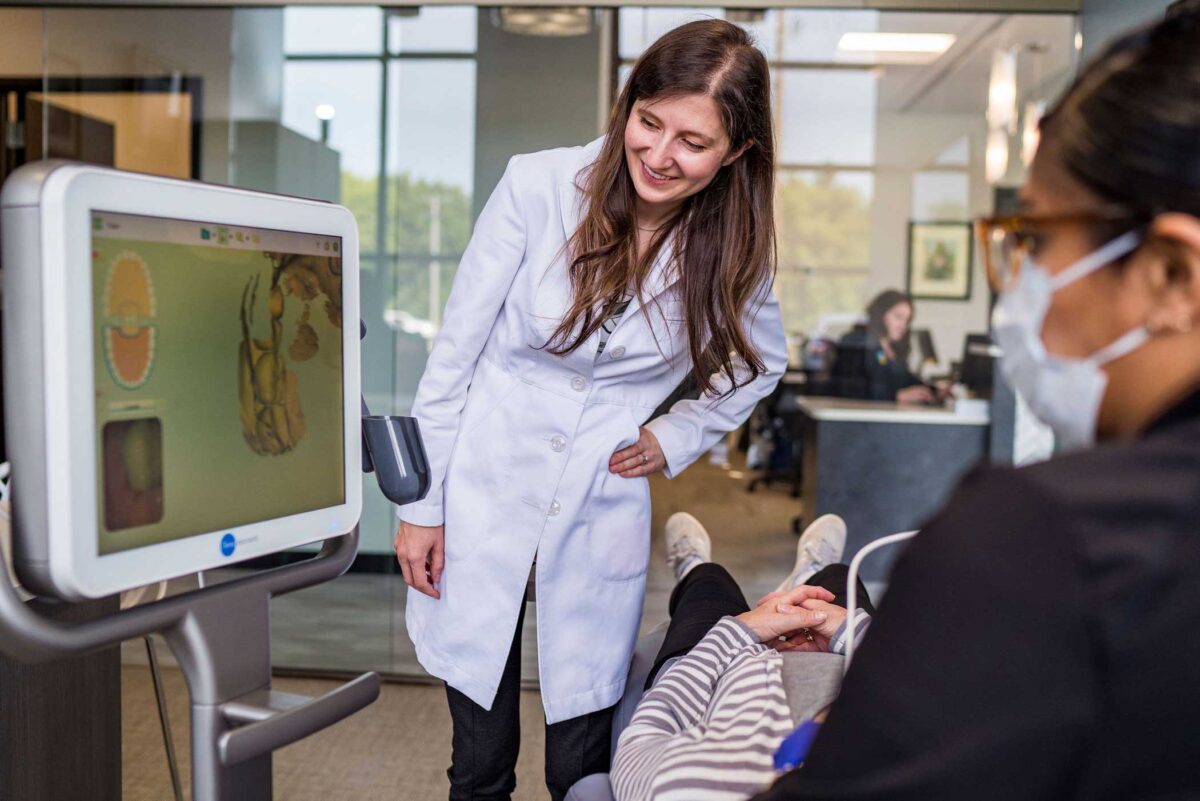
Dr. Horton is a board certified orthodontist with years of experience and expertise in her field. She is proud to provide a locally owned and operated practice that offers a welcoming environment and cutting-edge orthodontic technology for all patients. Get started with the smile of your dreams today!